mercoledì 28 ottobre 2009

Hohenstaufen Dynasty
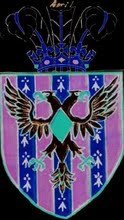
HIRH Princess Yasmin von Hohenstaufen

L'enciclopedia Britannica presenta il DVD della Hohenstaufen Dynasty:e' princess Yasmin l'ultima sveva! 14 aprile 2009 copryright © 1994-2002 Encyclopædia Britannica, Inc. Sources Encylopedia Britannica 2002, Expanded ion DVD The Hohenstaufen were a dynasty of Kings of Germany, many of whom were also crowned Holy Roman Emperor and Dukes of Swabia.
The proper name, taken from their castle in Swabia, is Staufen. When the last member of the Salian dynasty, Henry V, Holy Roman Emperor, died without an heir there was controversy about the succession. Frederick and Conrad, the two current male Staufens, were grandsons of Henry III, Holy Roman Emperor and nephews of Henry V. After the death of the intervening king and emperor Lothar III of Supplinburg, in 1137, Conrad became Conrad III of Germany. Contents 1 Members of the Hohenstaufen family 1.1 Holy Roman Emperors and Kings of Germany 1.2 Dukes of Swabi Members of the Hohenstaufen family Holy Roman Emperors and Kings of Germany Conrad III, king 1138-1152 Frederick I Barbarossa, king 1152-1190, Emperor after 1155 Henry VI, king 1190-1197, Emperor after 1191 Philip of Swabia, king 1198-1208 Frederick II, king 1208-1250, Emperor after 1220 Henry (VII), king 1220 - 1235 (under his father) Conrad IV, king 1237-1254 (under his father) The last ruling Hohenstaufen, Conrad IV, was never crowned emperor.
After a 20 year period the first Habsburg was elected king. Dukes of Swabia Note: Some of the following dukes are already listed above as German Kings Frederick I, Duke of Swabia (Friedrich) (r. 1079 - 1105) Frederick II, Duke of Swabia (r. 1105 - 1147) Frederick I, Holy Roman Emperor (Frederick III of Swabia)(r. 1147 - 1152) King in 1152 and Holy Roman Emperor in 1155 Frederick IV, Duke of Swabia (r. 1152 - 1167) Frederick V, Duke of Swabia (r. 1167 - 1170) Frederick VI, Duke of Swabia (r. 1170 - 1191) Conrad II, Duke of Swabia (r. 1191 - 1196) Philip of Swabia (r. 1196 - 1208) King in 1198 Frederick II, Holy Roman Emperor (r.
1212 - 1216) King in 1212 and Holy Roman Emperor in 1220 Henry (VII) of Germany (r. 1216 - 1235), King 1220 - 1235 Conrad IV (r. 1235 - 1254) King in 1237 Conrad V (Conradin) (r. 1254 - 1268) See also: Dukes of Swabia family tree See also List of monarchs of Naples and Sicily. Hohenstaufen kings ruled in Sicily from 1194 till Manfred of Sicily was killed in the Battle of Benevento in 1266. During the Third Reich, the Waffen-SS named an SS Panzer division Hohenstaufen in honour of this family. also called Staufer Dynasty, German dynasty that ruled the Holy Roman Empire from 1138 to 1208 and from 1212 to 1254.
The founder of the line was the count Friedrich (died 1105), who built Staufen Castle in the Swabian Jura Mountains and was rewarded for his fidelity to Emperor Heinrich IV. (1050-1106) by being appointed duke of Swabia as Friedrich I in 1079. He later married Heinrich's daughter Agnes. His two sons, Friedrich II, duke of Swabia, and Konrad, were the heirs of their uncle, Emperor Heinrich V. (1086-1125), who died childless in 1125. After the interim reign of the Saxon Lothair III. (1075-1137), Konrad became German king and Holy Roman emperor as Konrad III. (1093-1152) in 1138. Subsequent Hohenstaufen rulers were Friedrich I.
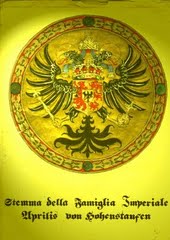
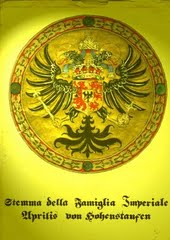
Barbarossa (1123-1190) (Holy Roman emperor 1155?90), Heinrich VI. (1165-1197) (Holy Roman emperor 1191?97), Philip of Swabia (king 1198? 1208), Friedrich II. (1194-1250) (king, 1212?50, emperor 1220?50), and Conrad IV (king 1237?54). The Hohenstaufen, especially Friedrich I and Friedrich II, continued the struggle with the papacy that began under their Salian predecessors, and were active in Italian affairs. The Last Empress of imperial dynasty Avril von Hohenstaufen Burey Anjou Plantagenet is H.I.R.H. Princess Yasmine Aprile von Hohenstaufen Puoti von Comneno Canmore(1946 Chateau Princes Puoti Palais Puoti- Villa di Briano) Copyright © 1994-2002 Encyclopædia Britannica, Inc. Sources Encylopedia Britannica 2002, Expanded ion DVD

L'enciclopedia Britannica presenta il DVD della Hohenstaufen Dynasty:e' princess Yasmin l'ultima sveva! 14 aprile 2009 copryright © 1994-2002 Encyclopædia Britannica, Inc. Sources Encylopedia Britannica 2002, Expanded ion DVD The Hohenstaufen were a dynasty of Kings of Germany, many of whom were also crowned Holy Roman Emperor and Dukes of Swabia.
The proper name, taken from their castle in Swabia, is Staufen. When the last member of the Salian dynasty, Henry V, Holy Roman Emperor, died without an heir there was controversy about the succession. Frederick and Conrad, the two current male Staufens, were grandsons of Henry III, Holy Roman Emperor and nephews of Henry V. After the death of the intervening king and emperor Lothar III of Supplinburg, in 1137, Conrad became Conrad III of Germany. Contents 1 Members of the Hohenstaufen family 1.1 Holy Roman Emperors and Kings of Germany 1.2 Dukes of Swabi Members of the Hohenstaufen family Holy Roman Emperors and Kings of Germany Conrad III, king 1138-1152 Frederick I Barbarossa, king 1152-1190, Emperor after 1155 Henry VI, king 1190-1197, Emperor after 1191 Philip of Swabia, king 1198-1208 Frederick II, king 1208-1250, Emperor after 1220 Henry (VII), king 1220 - 1235 (under his father) Conrad IV, king 1237-1254 (under his father) The last ruling Hohenstaufen, Conrad IV, was never crowned emperor.
After a 20 year period the first Habsburg was elected king. Dukes of Swabia Note: Some of the following dukes are already listed above as German Kings Frederick I, Duke of Swabia (Friedrich) (r. 1079 - 1105) Frederick II, Duke of Swabia (r. 1105 - 1147) Frederick I, Holy Roman Emperor (Frederick III of Swabia)(r. 1147 - 1152) King in 1152 and Holy Roman Emperor in 1155 Frederick IV, Duke of Swabia (r. 1152 - 1167) Frederick V, Duke of Swabia (r. 1167 - 1170) Frederick VI, Duke of Swabia (r. 1170 - 1191) Conrad II, Duke of Swabia (r. 1191 - 1196) Philip of Swabia (r. 1196 - 1208) King in 1198 Frederick II, Holy Roman Emperor (r.
1212 - 1216) King in 1212 and Holy Roman Emperor in 1220 Henry (VII) of Germany (r. 1216 - 1235), King 1220 - 1235 Conrad IV (r. 1235 - 1254) King in 1237 Conrad V (Conradin) (r. 1254 - 1268) See also: Dukes of Swabia family tree See also List of monarchs of Naples and Sicily. Hohenstaufen kings ruled in Sicily from 1194 till Manfred of Sicily was killed in the Battle of Benevento in 1266. During the Third Reich, the Waffen-SS named an SS Panzer division Hohenstaufen in honour of this family. also called Staufer Dynasty, German dynasty that ruled the Holy Roman Empire from 1138 to 1208 and from 1212 to 1254.
The founder of the line was the count Friedrich (died 1105), who built Staufen Castle in the Swabian Jura Mountains and was rewarded for his fidelity to Emperor Heinrich IV. (1050-1106) by being appointed duke of Swabia as Friedrich I in 1079. He later married Heinrich's daughter Agnes. His two sons, Friedrich II, duke of Swabia, and Konrad, were the heirs of their uncle, Emperor Heinrich V. (1086-1125), who died childless in 1125. After the interim reign of the Saxon Lothair III. (1075-1137), Konrad became German king and Holy Roman emperor as Konrad III. (1093-1152) in 1138. Subsequent Hohenstaufen rulers were Friedrich I.
Barbarossa (1123-1190) (Holy Roman emperor 1155?90), Heinrich VI. (1165-1197) (Holy Roman emperor 1191?97), Philip of Swabia (king 1198? 1208), Friedrich II. (1194-1250) (king, 1212?50, emperor 1220?50), and Conrad IV (king 1237?54). The Hohenstaufen, especially Friedrich I and Friedrich II, continued the struggle with the papacy that began under their Salian predecessors, and were active in Italian affairs. The Last Empress of imperial dynasty Avril von Hohenstaufen Burey Anjou Plantagenet is H.I.R.H. Princess Yasmine Aprile von Hohenstaufen Puoti von Comneno Canmore(1946 Chateau Princes Puoti Palais Puoti- Villa di Briano) Copyright © 1994-2002 Encyclopædia Britannica, Inc. Sources Encylopedia Britannica 2002, Expanded ion DVD
mercoledì 23 settembre 2009
Ecoscienziato Yasmin von Hohenstaufen :"Acqua sulla Luna?" "Megliosalvaguardare la fonte sacra del nostro pianeta che ha i giorni contati!"
La presidente Ucert Principessa Yasmin von Hohenstaufen ,avverte:"E'inutilecercare gocce di acqua sulla luna o altri pianeti del nostro sistema planetario.L'ultima sacra fonte e' quella del nostro pianeta ed e'ha i giorni contati!"
In relazione all'annuncio della Nasa,che sia possibile la presenza di acqua sulla luna,la presidente Ucert Prof Yasmin von Hohenstaufen ecoscienziato sostiene l'impossibilita' di presenza di formazioni acquifere per i seguenti motivi:l'acqua e'un protossido d'idrogeno,antico nome dato a quello di una serie di ossidi dello stesso elemento contenente la minima quantita'di ossigeno.Per la formazione di acqua sono quindi necessari una serie di ossidazioni che necessitano particolari ed ottimali condizioni ambientali, ma anche enzimi ossidanti,i quali hanno capacita' di determinare rapide ossidazioni e di attivare l'ossigeno dell'aria.Ilforte sbalzo di temperatura che avviene bruscamente dal passaggio dalla notte al giorno lunare e' dovuto alla mancanza di atmosfera , per cui qualsiasi movimento idrogeologico,non solo sarebbe impedito,ma se ci fosse ,le particelle acquifere sarebbero soggette continuamente a repentini ed elevatissimi cambiamenti di stato ,cioe' da aque fortemente solide a quelle di vapore.Le ricariche idrogeologiche sotterranee non esistono per mancanza di atmosfera e di conseguenti fenomeni meteorici.La caolinizzazione delle eventuali rocce feldspatiche lunari non puo'verificarsi per mancanza di acqua , poiche'la caolinizzazione e'determinata dall'azione di acque acide calde o fredde sui felspati e felspadoiti con formazione di caolino e perdita di alcali:ne consegue che sia l'argilla mineralogica che quella agraria non hanno possibilita' di formazione e le possibilita' sempre piu' enigmatiche ,quando si pensa che tra gli altri componenti dell'argilla agraria vi sono:dolomiti, ossidi di ferro,ossido di manganese sostanze organiche unificate , questi ultimi assenti nei campioni lunari. Certamente proseguire studi per inserire ulteriori prove di dati geosisimici e geogravimetrici,geolitrici-potenziometrici e'auspicabile.(UCERTNEWS- Washington)
Invia questo articolo(AGI) - New Delhi, 23 set. - C'e' acqua sulla luna: l'annuncio potrebbe arrivare domani dalla Nasa, che ha convocato una conferenza stampa per annunciare "un'importante scoperta". A parlare sara' Carle Pieters della Brown University, uno dei principali ricercatori della Nasa per la mappatura dei minerali della luna (M3). Secondo quanto anticipato dal Times of India, a rilevare per prima la presenza dell'acqua e' stata la sonda indiana Chandrayaan-1 che il 30 agosto aveva dovuto interrompere in anticipo la sua missione, iniziata nell'ottobre 2008. Chandrayaan-1 aveva tra gli obiettivi principali proprio quello di verificare la presenza di acqua sul principale satellite della terra. In un articolo in imminente uscita su Science, si spiega che una sonda della Nasa, il Lunar Reconnaissaince Orbiter, ha individuato la presenza di ghiaccio nei pressi del Polo sud lunare. Fin dagli anni '80 era stata rilevata la possibile presenza di acqua sulla luna, ma questa sarebbe la prima volta che se ne ha una conferma.
In relazione all'annuncio della Nasa,che sia possibile la presenza di acqua sulla luna,la presidente Ucert Prof Yasmin von Hohenstaufen ecoscienziato sostiene l'impossibilita' di presenza di formazioni acquifere per i seguenti motivi:l'acqua e'un protossido d'idrogeno,antico nome dato a quello di una serie di ossidi dello stesso elemento contenente la minima quantita'di ossigeno.Per la formazione di acqua sono quindi necessari una serie di ossidazioni che necessitano particolari ed ottimali condizioni ambientali, ma anche enzimi ossidanti,i quali hanno capacita' di determinare rapide ossidazioni e di attivare l'ossigeno dell'aria.Ilforte sbalzo di temperatura che avviene bruscamente dal passaggio dalla notte al giorno lunare e' dovuto alla mancanza di atmosfera , per cui qualsiasi movimento idrogeologico,non solo sarebbe impedito,ma se ci fosse ,le particelle acquifere sarebbero soggette continuamente a repentini ed elevatissimi cambiamenti di stato ,cioe' da aque fortemente solide a quelle di vapore.Le ricariche idrogeologiche sotterranee non esistono per mancanza di atmosfera e di conseguenti fenomeni meteorici.La caolinizzazione delle eventuali rocce feldspatiche lunari non puo'verificarsi per mancanza di acqua , poiche'la caolinizzazione e'determinata dall'azione di acque acide calde o fredde sui felspati e felspadoiti con formazione di caolino e perdita di alcali:ne consegue che sia l'argilla mineralogica che quella agraria non hanno possibilita' di formazione e le possibilita' sempre piu' enigmatiche ,quando si pensa che tra gli altri componenti dell'argilla agraria vi sono:dolomiti, ossidi di ferro,ossido di manganese sostanze organiche unificate , questi ultimi assenti nei campioni lunari. Certamente proseguire studi per inserire ulteriori prove di dati geosisimici e geogravimetrici,geolitrici-potenziometrici e'auspicabile.(UCERTNEWS- Washington)
Invia questo articolo(AGI) - New Delhi, 23 set. - C'e' acqua sulla luna: l'annuncio potrebbe arrivare domani dalla Nasa, che ha convocato una conferenza stampa per annunciare "un'importante scoperta". A parlare sara' Carle Pieters della Brown University, uno dei principali ricercatori della Nasa per la mappatura dei minerali della luna (M3). Secondo quanto anticipato dal Times of India, a rilevare per prima la presenza dell'acqua e' stata la sonda indiana Chandrayaan-1 che il 30 agosto aveva dovuto interrompere in anticipo la sua missione, iniziata nell'ottobre 2008. Chandrayaan-1 aveva tra gli obiettivi principali proprio quello di verificare la presenza di acqua sul principale satellite della terra. In un articolo in imminente uscita su Science, si spiega che una sonda della Nasa, il Lunar Reconnaissaince Orbiter, ha individuato la presenza di ghiaccio nei pressi del Polo sud lunare. Fin dagli anni '80 era stata rilevata la possibile presenza di acqua sulla luna, ma questa sarebbe la prima volta che se ne ha una conferma.
giovedì 3 settembre 2009
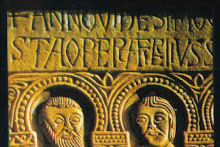
Teutonic Order Founder Haenricus Pot or Walpot,dynasty of King Didier and Hohenstaufenhouse
PUGLIA: PRINCIPESSA DI SVEVIA, Puella Apuliae , RIVUOLE CASTEL DEL MONTE, 'ITALIA NON LO SA CURARE'
Roma, 8 set 09
libero-news
Si sono mobilitate istituzioni pubbliche e private,per la bonifica del parco di Castel del Monte .
Certamente lodevole che abbiano ascoltato "il grido dell'aquila" della Principessa Yasmin,puella Apuliae!
Roma, 8 set 09
libero-news
Si sono mobilitate istituzioni pubbliche e private,per la bonifica del parco di Castel del Monte .
Certamente lodevole che abbiano ascoltato "il grido dell'aquila" della Principessa Yasmin,puella Apuliae!
Le tombeau
Philippe Pot fut inhumé dans l'abbaye de Cîteaux dans la chapelle Saint Jean-Baptiste, sous un magnifique tombeau. Ce mausolée, représente Philippe Pot en gisant de grandeur naturelle, porté sur les épaules de huit moines « pleureux » de pierre noire. Il a été saisi comme bien national le 4 mai 1791. Il devait être transporté dans l'église Saint-Bénigne de Dijon, transformée en musée, où il n'arriva jamais.
Après une éclipse de plus de quinze ans, Charles Richard de Vesvrotte le racheta le 9 septembre 1808 pour 53 francs à un entrepreneur. Il le fit installer dans le jardin de l'hôtel de Ruffey. Après la vente de l'hôtel en 1850 par Alphonse Richard, 2e comte de Vesvrotte, le tombeau fut déposé dans la crypte de l'hôtel d'Agrain, 18, rue Chabot-Charny à Dijon, puis dressé dans le parc du château de Vesvrotte.
En 1886 l'Etat revendique la propriété du tombeau devant le tribunal de première instance de Dijon le 10 février 1886. Mais la cour d'appel de Dijon le 9 août 1886, reconnaît la propriété du tombeau au comte Armand de Vesvrotte, et lève la saisie le 3 mars 1887. Acquis finalement en 1889, par l'intermédiaire de l'expert Charles Mannheim, il demeure aujourd'hui au Louvre. Le tombeau de Phiplippe Pot est exposé dans la chapelle du château de Chateauneuf-en-Auxois
Philippe Pot fut inhumé dans l'abbaye de Cîteaux dans la chapelle Saint Jean-Baptiste, sous un magnifique tombeau. Ce mausolée, représente Philippe Pot en gisant de grandeur naturelle, porté sur les épaules de huit moines « pleureux » de pierre noire. Il a été saisi comme bien national le 4 mai 1791. Il devait être transporté dans l'église Saint-Bénigne de Dijon, transformée en musée, où il n'arriva jamais.
Après une éclipse de plus de quinze ans, Charles Richard de Vesvrotte le racheta le 9 septembre 1808 pour 53 francs à un entrepreneur. Il le fit installer dans le jardin de l'hôtel de Ruffey. Après la vente de l'hôtel en 1850 par Alphonse Richard, 2e comte de Vesvrotte, le tombeau fut déposé dans la crypte de l'hôtel d'Agrain, 18, rue Chabot-Charny à Dijon, puis dressé dans le parc du château de Vesvrotte.
En 1886 l'Etat revendique la propriété du tombeau devant le tribunal de première instance de Dijon le 10 février 1886. Mais la cour d'appel de Dijon le 9 août 1886, reconnaît la propriété du tombeau au comte Armand de Vesvrotte, et lève la saisie le 3 mars 1887. Acquis finalement en 1889, par l'intermédiaire de l'expert Charles Mannheim, il demeure aujourd'hui au Louvre. Le tombeau de Phiplippe Pot est exposé dans la chapelle du château de Chateauneuf-en-Auxois
Il discendente di Haenricus Potus von Walpotus , Philip ,antenato des Avril de Montemorency de Pot e' sepolto nell'Abbazia di Citeaux.

L'histoire de la Maçonnerie en France
Période
15éme siècle
Philippe Pot,de Walpot ou Rochepot,descendant de Haenricus Pot ou Walpot, Premier Gran Master Teutonic Order
Homme politique bourguignon d'abord au service de Philippe le Bon, puis de Charles le Téméraire, Philippe Pot fut ensuite appelé à la cour de France par Louis XI, qui le nomma grand sénéchal de Bourgogne.
Au service de la Bourgogne
Philippe Pot, seigneur de La Roche (plus tard La Rochepot), fut élevé à la cour du duc de Bourgogne. Il fut le filleul et le favori de Philippe le Bon, qui lui conféra la Toison d'or. Nommé premier chambellan du duc, il fut chargé de gouverner la Flandre française. Il remplit avec succès plusieurs missions diplomatiques, négociant en particulier les trois mariages successifs du comte de Charolais (qui allait devenir Charles le Téméraire); le troisième mariage, en 1468, avec Marguerite d'York, sœur d'Édouard IV, scella le rapprochement de la Bourgogne et de l'Angleterre. Après la mort de Philippe le Bon, il conserva ses charges et la faveur du nouveau duc, Charles le Téméraire. Quand ce dernier mourut, en 1477, la fille du duc, Marie de Bourgogne, montra une grande méfiance envers Philippe Pot et lui retira ses charges, peut-être parce qu'il était déjà en relation avec le roi de France.
Au service du royaume
Louis XI, avide d'hommes de talent, appela Philippe Pot à ses côtés et le combla de faveurs, le nommant premier conseiller et chambellan, lui décernant l'ordre de Saint-Michel. Pot facilita l'intégration du duché de Bourgogne au royaume de France et fut nommé en 1477 grand sénéchal de Bourgogne. Il devint aussi gouverneur du dauphin (le futur Charles VIII). En 1484, il occupa le siège de député de la noblesse de Bourgogne aux états généraux de Tours, réunis à la suite de la mort de Louis XI. Il se fit remarquer par son éloquence, son indépendance d'opinion, sa hardiesse de langage, et fut surnommé "Bouche de Cicéron". Pierre de Beaujeu et sa femme Anne, fille de Louis XI, avaient été désignés par le roi mourant pour assumer la régence; dans un discours célèbre, Philippe Pot affirma qu'il appartenait aux états généraux de nommer les membres du Conseil de régence, mais il ne fut pas suivi par les députés, qui laissèrent le champ libre aux Beaujeu. Malgré ses positions, il ne subit aucune disgrâce. Charles VIII le nomma gouverneur de Bourgogne et le chargea de l'éducation de son fils Charles Orlando Philippe Pot s'était fait élever de son vivant un magnifique mausolée, dans l'abbatiale de Cîteaux; ce monument, aujourd'hui au Louvre, est un des plus beaux exemples de la sculpture réaliste de la seconde moitié du XVe siècle.
Citation
"N'avez-vous pas lu souvent que l'État est la chose du peuple? C'est lui qui l'a confié aux rois."
Philippe Pot, un maçon en France aux états généraux de 1484
1428 - 1494
Tombeau de Philippe Pot.
Iscriviti a:
Post (Atom)


.jpg)
.jpg)
.jpg)
.jpg)
.jpg)
.jpg)
.jpg)